
Posts

Montessori Practical Life Activities

How Montessori Practical Life Activities Build Independence in Young Children

Montessori practical life activities help young children build independence through meaningful everyday tasks, such as pouring water, fastening buttons, and caring for their classroom. These experiences give children opportunities to practice coordination, concentration, and responsibility at their own pace. With patient guidance and materials suited to their abilities, children gradually learn to care for themselves and contribute to their community.

At Montessori Episcopal School, practical life learning supports our commitment to nurturing independent, confident learners in a caring Christian environment. Understanding the purpose behind these activities helps parents see how everyday experiences lay the foundation for lasting independence.

How Practical Life Learning Builds Independence Skills for Preschoolers

Developing independence skills for preschoolers begins with opportunities to participate meaningfully in everyday life. In a Montessori classroom, practical life activities have a clear purpose and an achievable outcome. Carrying a tray to a table, transferring objects with a spoon, or arranging flowers allows children to complete useful work through their own efforts.

The value extends beyond completing the task. Children practice making decisions, following a sequence, and responding when things don’t go as expected.

Building Confidence Through Repetition

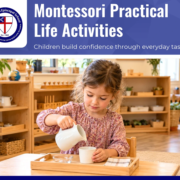
Children often choose the same activity many times. This repetition gives them opportunities to refine their movements and become more comfortable with each step. A child learning to pour may initially spill water or need help positioning the pitcher. With continued practice, the movement can become more controlled.

Confidence develops through these experiences of progress. Rather than relying only on adult praise, children can recognize the results of their own work: the water reaches the cup, and the task is complete.

Practicing the Steps Behind Independent Action

Practical life learning brings several abilities together:

  • Planning: Choosing the materials needed before beginning.
  • Concentration: Giving attention to one purposeful activity.
  • Sequencing: Completing steps in an organized order.
  • Problem-solving: Adjusting an approach when difficulties arise.
  • Persistence: Trying again without expecting immediate success.

These abilities support children as they encounter unfamiliar responsibilities and increasingly complex classroom work.

Recognizing Progress Beyond the Finished Task

Independence does not require children to manage every challenge alone. Recognizing when to ask for assistance is also an important part of becoming capable.

Progress may show up in small changes: starting an activity with fewer reminders, noticing a missed step, or returning to unfinished work. When adults recognize these efforts and allow sufficient time, children have space to develop ownership of their actions and trust in their growing abilities.

Montessori Self-Care Activities for Dressing, Washing, and Eating

Montessori self-care activities give young children an active role in meeting their daily needs. Dressing, washing, and eating become opportunities to practice purposeful movements and take responsibility for personal routines. Tasks are introduced in manageable steps, with expectations adapted to each child’s readiness.

Dressing: Managing Clothing and Fastenings

Getting dressed involves coordinating both hands, positioning clothing, and working through a sequence. Montessori dressing frames isolate individual fastenings, such as buttons or zippers, so children can practice one movement before applying it to their clothing.

Everyday opportunities may include:

  • Pulling on elastic-waist pants.
  • Putting on and removing a jacket.
  • Opening and closing shoes with hook-and-loop straps.
  • Practicing larger buttons before smaller fastenings.

Clothing that children can manage comfortably makes participation more achievable. An adult may start a difficult step while letting the child finish.

Washing: Following a Personal Care Routine

Handwashing offers a clear sequence with a practical purpose. Children learn to wet their hands, apply soap, wash thoroughly, rinse, and dry. Accessible supplies and a safely arranged washing area help them participate with appropriate supervision.

Other activities include wiping their face after eating and, with guidance, brushing their hair. Consistent routines help children understand when personal care is needed, while respectful assistance preserves their comfort and dignity.

Eating: Participating With Increasing Control

Mealtimes offer opportunities to handle utensils, drink from an open cup, and serve manageable portions with support. Small pitchers with a little water let children practice pouring without managing a heavy container.

The emphasis remains on participation and readiness. Adults provide suitable foods, supervise eating, and assist as needed while respecting children’s hunger and fullness cues.

Across these routines, success may mean completing just one additional step independently. Allowing time for that contribution helps children experience self-care as a growing capability within a supportive daily rhythm.

Practical Life Skills for Children: Caring for Shared Spaces

Practical life skills for children include caring for the spaces they share with others. In Montessori education, tending to the classroom gives children meaningful ways to contribute. Returning a material to its shelf or preparing a table helps them recognize that their actions affect the comfort and experience of those around them.

Giving Everyday Tasks a Shared Purpose

Caring for the environment connects individual effort to a visible benefit. A clean table is ready for another child’s work. An organized shelf makes materials easier for everyone to find. Watering a plant supports a living thing.

These responsibilities are introduced as valued contributions to classroom life. Children can see why the work matters and gradually develop a sense of belonging through participation.

Meaningful Ways to Care for the Classroom

Activities can be matched to children’s abilities and introduced with clear demonstrations:

  • Wiping tables: Using a small cloth to clean a designated surface after an activity.
  • Sweeping: Gathering small amounts of debris with a child-sized broom and dustpan.
  • Tending plants: Checking the soil and adding an appropriate amount of water with guidance.
  • Restoring materials: Returning each item to its designated place so someone else can use it.
  • Arranging shared spaces: Placing napkins or organizing supplies for a group activity.

Real, manageable tasks give children a clear role without holding them to adult standards of cleanliness or organization.

Connecting Responsibility With Consideration

Caring for shared spaces also offers a practical way to show respect. Children begin to understand that materials belong to a community and should remain available and usable for others.

Adults can make this connection clear by simply explaining the task’s purpose. Over time, these experiences help children recognize needs beyond their own, contribute with increasing initiative, and understand responsibility as part of living and learning together.

Nurturing Independence at Montessori Episcopal School

At Montessori Episcopal School in Lewisville, Texas, we nurture independence as part of our commitment to educating the whole child. Our approach blends Montessori philosophy with Christian values, supporting children as they develop practical skills, consideration for others, and confidence in their efforts.

Through individualized instruction and hands-on learning, we respect each child’s pace while providing opportunities to take an active role in daily classroom life.

Supporting Growth Across Our Programs

Our programs serve children from nine months through six years of age, with learning experiences suited to different stages of development. Practical life learning remains relevant as children’s abilities and responsibilities grow.

  • Toddler I: Early experiences emphasize exploration, movement, language, and early participation in practical life.
  • Toddler II: Children continue developing coordination and language while practicing work sequences and personal care skills, including supported toilet learning.
  • Preparatory: Learning includes independence, grace and courtesy, and academic development, helping children participate thoughtfully in their classroom community.

Across these stages, the purpose is to give children meaningful opportunities to practice what they are becoming ready to do.

Connecting Independence With Christian Values

We view growing independence alongside kindness, respect, and service to others. Learning to manage personal tasks builds self-confidence, while caring for materials and shared spaces helps children understand their responsibilities within a community.

This reflects our broader goal of nurturing academic growth, creativity, leadership, and a love of learning within a caring Christian environment. Children’s contributions matter for their development and the relationships they build.

Discover Our Approach in Person

Choosing an early learning environment involves understanding how its values shape daily experiences. We welcome families to visit Montessori Episcopal School, learn about our programs, and discuss their child’s needs with our team.

Schedule a tour to explore how our Montessori approach supports your child’s growing independence.

Conclusion

Independence develops through everyday opportunities to participate, practice, and contribute. Montessori practical life activities give children meaningful ways to care for themselves and their surroundings while learning that their efforts have value. With time and patient guidance, these experiences help children approach responsibilities with greater confidence and consideration for others.

At Montessori Episcopal School, this growth is part of an education that respects each child’s development and connects learning with Christian values. Each new responsibility becomes an opportunity to strengthen both personal capability and a sense of belonging.

Discover a place where your child’s growing abilities are valued. Arrange your visit: (972) 895-9050 or https://montessoriepiscopal.com/contact/.

Montessori Practical Life Activities

How Montessori Practical Life Activities Build Kindergarten Readiness

Montessori practical life activities help young children develop the essential skills they need for a confident transition into kindergarten. Through purposeful tasks such as pouring, sorting, buttoning, cleaning, and organizing, children strengthen their coordination, concentration, independence, and sense of responsibility. 

These everyday activities also support fine motor development, problem-solving, and the ability to follow a sequence of steps. By working at their own pace in a carefully prepared environment, children gain confidence in their abilities and learn how to manage tasks with greater focus. These foundational skills play an important role in preparing children for the academic, social, and practical expectations of kindergarten.

Practical Life Skills for Preschoolers and Their Role in Early Development

Practical Life Skills for Preschoolers

Practical life skills for preschoolers are an essential part of Montessori education because they connect learning with meaningful, everyday experiences. Activities such as pouring water, fastening buttons, sweeping, washing hands, and preparing simple snacks may appear routine, but each task supports several areas of development at once. Children learn how to care for themselves, contribute to their environment, and complete purposeful work with increasing confidence.

Developing Coordination and Fine Motor Control

Many practical life activities require precise hand movements and careful attention. Transferring objects with tongs, spooning dry materials, folding cloths, and using dressing frames strengthen the small muscles in the hands and fingers. These movements help prepare children for later academic tasks, including holding a pencil, writing, cutting with scissors, and handling classroom materials.

Building Concentration Through Purposeful Work

Practical life exercises often follow a clear sequence from beginning to end. A child may gather materials, complete the task, clean the workspace, and return each item to its proper place. This structure encourages sustained attention and helps children understand the importance of completing what they begin.

Through repeated practice, children develop:

  • Greater focus and patience
  • Improved memory for multi-step instructions
  • Stronger organizational habits
  • Confidence when approaching new tasks

Supporting Responsibility and Self-Awareness

When children are trusted with real responsibilities, they begin to recognize their own capabilities. Caring for classroom plants, setting a table, organizing materials, or cleaning a small spill teaches that their actions have value. These experiences also help children become more aware of their surroundings and others’ needs.

Practical life learning supports development beyond physical ability. It encourages self-discipline, decision-making, and respect for shared spaces. By practicing these skills regularly in a calm and carefully prepared environment, preschoolers build a strong foundation for independence, classroom participation, and future learning.

Kindergarten Readiness Skills Developed Through Practical Life Activities

Kindergarten Readiness Skills

Kindergarten readiness skills extend beyond early literacy and numeracy. Children also need to follow routines, manage personal belongings, work independently, and participate appropriately in a group setting. Montessori practical life activities help develop these abilities through purposeful tasks that encourage responsibility, coordination, and concentration.

Strengthening Focus and Task Completion

Activities such as pouring, sorting, polishing, and food preparation require children to follow a clear sequence. They learn to gather materials, complete each step, clean the workspace, and return items to their proper place. This process strengthens attention span and helps children become comfortable working through a task from beginning to end.

These experiences support important classroom habits, including:

  • Listening carefully to instructions
  • Remembering a sequence of steps
  • Staying focused for longer periods
  • Completing work with care
  • Transitioning between activities calmly

Preparing for Classroom Routines

Practical life work introduces children to the structure and expectations they will encounter in kindergarten. Waiting for a material, taking turns, choosing an activity, and tidying up all contribute to a sense of order. Children become familiar with time management and making appropriate decisions in a prepared environment.

Supporting Fine Motor and Academic Readiness

Many practical life exercises strengthen the hand and wrist muscles needed for writing. Using tongs, fastening buttons, transferring small objects, and folding materials improve grip, control, and hand-eye coordination. These skills can make it easier for children to hold pencils, use scissors, and complete classroom projects.

Practical life activities also promote problem-solving and independence. When children encounter a spill, a difficult fastening, or an item that does not fit, they learn to pause, adjust, and try again. This persistence helps prepare them to approach kindergarten learning with confidence, patience, and a willingness to participate.

Montessori Independence Activities That Build Confidence

Montessori Independence Activities

Montessori independence activities give children meaningful opportunities to take an active role in their own learning and daily care. Instead of completing every task for the child, the Montessori approach provides suitable materials, clear demonstrations, and enough time for practice. This allows children to experience success through their own effort.

Encouraging Self-Care Skills

Activities such as buttoning clothing, washing hands, brushing hair, putting on shoes, and serving food help children manage everyday needs with greater independence. These tasks strengthen coordination while also giving children a sense of control over their routines.

As children practice self-care, they begin to develop:

  • Confidence in their abilities
  • Greater patience with challenging tasks
  • Awareness of personal needs
  • Responsibility for their belongings
  • A stronger sense of accomplishment

Creating Opportunities for Meaningful Choice

A prepared Montessori environment gives children the freedom to select appropriate work and complete it at their own pace. Choosing between activities encourages decision-making and helps children recognize their interests and abilities. Clear boundaries ensure that this freedom remains purposeful and respectful.

Learning Through Repetition and Self-Correction

Confidence grows when children are allowed to practice without unnecessary interruption. Repeating a task helps them refine their movements and understand each step more fully. Many Montessori materials also allow children to notice and correct errors independently, reducing their reliance on adult approval.

For example, a child may recognize that water has spilled, a button is misaligned, or materials have been returned incorrectly. The opportunity to correct the situation reinforces persistence and problem-solving.

Over time, these experiences help children view mistakes as part of learning. They become more willing to attempt unfamiliar tasks, ask for help when needed, and continue working when something feels difficult. This steady growth in independence supports both emotional confidence and readiness for future classroom responsibilities.

How Practical Life Activities Support Social and Emotional Growth

How Practical Life Activities Support Social and Emotional Growth

Practical life activities support social and emotional growth by helping children understand how their actions affect themselves, other people, and the environment. Through everyday responsibilities, children practice patience, respect, self-control, and cooperation in a natural and meaningful way.

Developing Emotional Regulation

Many practical life tasks require slow, careful movements. Pouring water, carrying a tray, arranging flowers, or washing a table encourages children to concentrate and move with intention. This focused work can create a sense of calm and help children manage frustration.

When a task does not go as planned, children learn to pause and try again. These experiences strengthen emotional resilience and teach that mistakes can be corrected.

Building Respect and Consideration

Caring for shared spaces helps children understand that they are part of a community. Activities such as tidying shelves, watering plants, preparing a snack, and cleaning up after work show children that their contributions are important.

Practical life experiences can help children practice:

  • Waiting patiently for materials
  • Taking turns with classmates
  • Respecting another child’s workspace
  • Offering appropriate help
  • Returning materials for the next person
  • Speaking and moving with consideration

Encouraging Cooperation and Graceful Interaction

Montessori environments often include lessons in grace and courtesy. Children may practice greeting others, asking permission, interrupting politely, and resolving simple disagreements. These lessons provide clear examples of respectful communication.

Practical life activities also create opportunities for shared responsibility. Two children may work together to set a table, prepare food, or care for the classroom. Through cooperation, they learn to listen, divide tasks, and recognize another person’s needs.

By combining purposeful work with consistent social expectations, practical life learning helps children develop empathy and self-awareness. These qualities support positive relationships and allow children to participate more confidently in group settings, both in preschool and as they prepare for kindergarten.

Conclusion

Montessori practical life activities give children more than the ability to complete everyday tasks. They help develop concentration, coordination, independence, responsibility, and confidence, all of which support a successful transition into kindergarten. Through meaningful work and consistent practice, children learn how to care for themselves, contribute to their environment, and approach new challenges with patience and determination.

Learn more about how Montessori Episcopal School supports kindergarten readiness. Call (972) 895-9050 or visit https://montessoriepiscopal.com/contact/.

ABOUT US

Montessori Episcopal School is the only Christian Montessori school in Denton county.

We have been serving Lewisville, Flower Mound and Highland Village toddlers through kindergartners for the past 50+ years.

OUR PROGRAMS

Montessori Episcopal School turns preschoolers into independent creative thinkers. Our programs have:

  • Individualized instruction on each child
  • Weekly Library, Art, PE, Music, and Spanish
  • Biblical training through weekly chapel

OUR PROGRAMS

  • A focus on whole-child learning, including physical, education and spiritual development
  • A natural, maker-space playground and garden
  • Passionate, long-tenured teachers
© Copyright - Montessori Episcopal School - All Rights Reserved.