
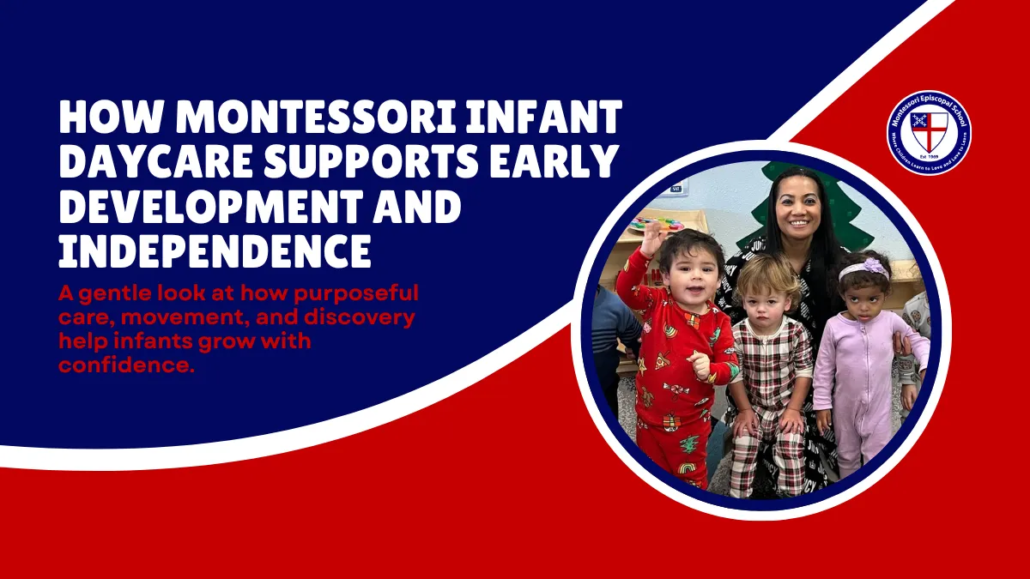
How Montessori Infant Daycare Supports Early Development And Independence
Montessori infant daycare provides a nurturing environment where babies are encouraged to grow, explore, and develop at their own natural pace. During the earliest stages of life, children benefit from consistent care, gentle guidance, and thoughtfully prepared surroundings that support movement, sensory awareness, language development, and emotional security.
The Montessori approach respects each infant as a capable learner, offering age-appropriate materials and routines that encourage curiosity and independence. By creating a calm, responsive environment, Montessori infant care helps children build confidence, develop trust, and begin to form the foundational skills they need for lifelong learning.
How the Infant Learning Environment Encourages Exploration
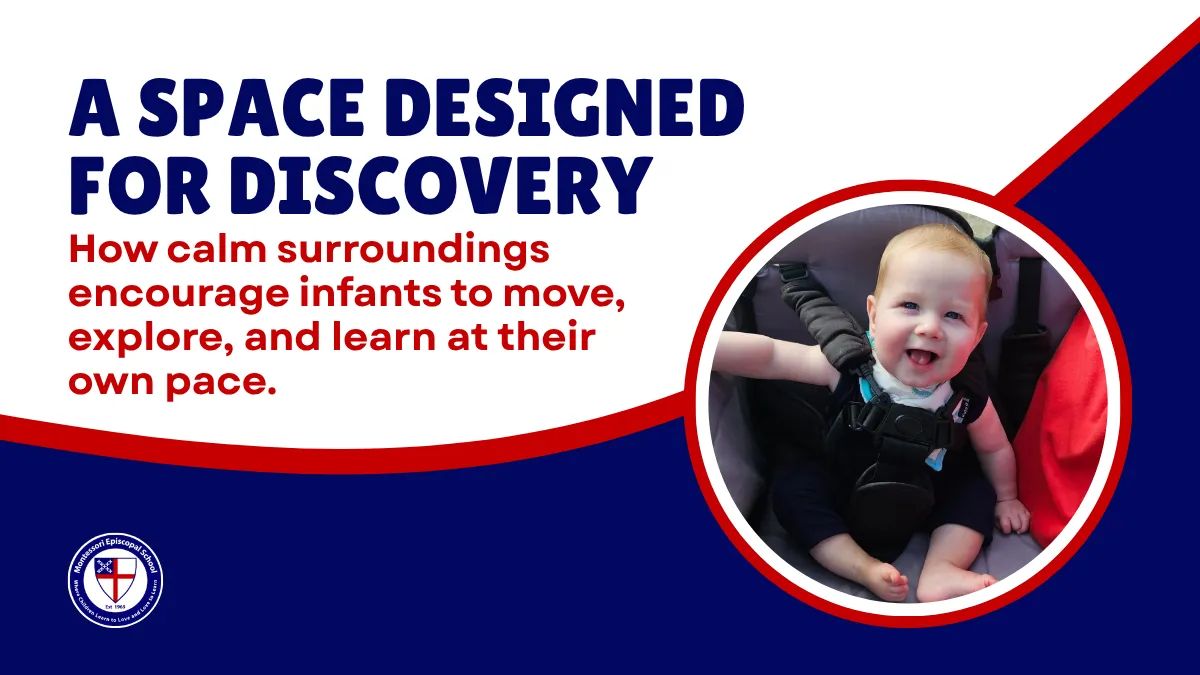
In a Montessori infant daycare, the learning environment is carefully prepared to help babies feel safe, comfortable, and ready to explore. Rather than filling the space with overstimulating toys or constant direction, the classroom is designed with calm colors, natural materials, soft lighting, and open areas for movement. This creates a peaceful setting where infants can focus on what interests them and begin developing confidence through discovery.
A Calm Space Designed With Purpose
A thoughtfully prepared infant environment often includes:
- Low shelves with simple, age-appropriate materials
- Soft floor spaces for reaching, rolling, crawling, and stretching
- Mirrors that encourage visual tracking and self-awareness
- Safe objects with different textures, shapes, and sounds
- Quiet areas for rest, comfort, and one-on-one connection
Each part of the room has a purpose. Materials are placed within reach so infants can begin making small choices, such as reaching for a soft ball, grasping a wooden ring, or observing their reflection in a mirror. These early choices may seem simple, but they support concentration, coordination, and independence.
Freedom of Movement and Discovery
The environment also encourages freedom of movement. Infants are given safe opportunities to move naturally, rather than being limited for long periods in seats or containers. This supports physical development while helping children learn about their own abilities. As they stretch toward an object, shift their weight, or crawl across a mat, they are building strength, balance, and problem-solving skills.
Caregivers play an important role by observing closely and offering gentle support when needed. They allow infants time to explore without unnecessary interruption, while remaining nearby to provide reassurance. This balance of independence and responsive care helps babies feel secure enough to try new things.
Through a calm, organized, and respectful environment, Montessori infant daycare gives young children the space they need to explore the world with curiosity and confidence.
What Montessori Care for Infants Looks Like Day to Day
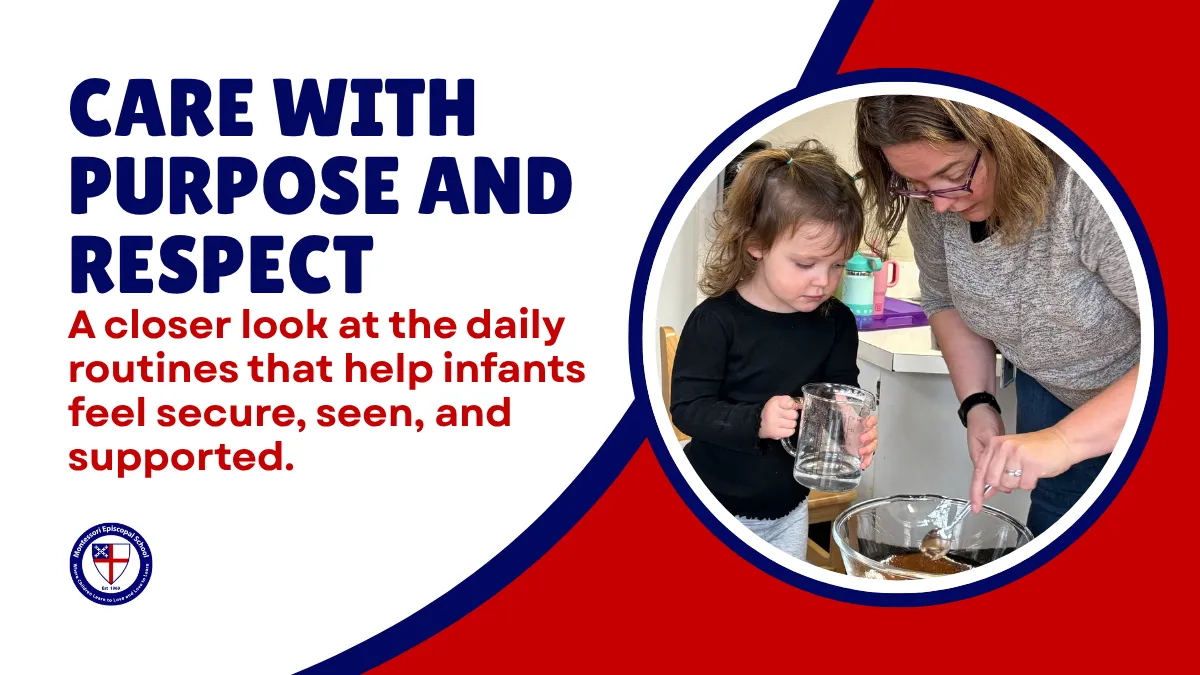
Montessori care for infants is rooted in consistency, respect, and close observation. Each day is thoughtfully structured, but not rushed. Infants are given predictable routines that help them feel secure, while caregivers remain attentive to each child’s individual needs, cues, and natural rhythm. This balance allows babies to experience comfort, trust, and gentle independence throughout the day.
Respectful Routines That Build Security
Daily care moments are treated as meaningful opportunities for connection. Feeding, diapering, resting, and transitions are handled with patience and warmth. Caregivers speak gently to infants, explain what is happening, and invite participation when appropriate. For example, a caregiver may pause before picking up a baby, make eye contact, and use calm language to foster trust.
A typical day may include:
- Individualized feeding and rest routines
- Time for movement on soft floor spaces
- Gentle songs, language, and face-to-face interaction
- Exploration with simple Montessori materials
- Outdoor time when appropriate
- Quiet moments for comfort and emotional regulation
Learning Through Observation and Choice
In Montessori infant care, caregivers do not direct every moment of the child’s day. Instead, they observe and offer materials or support based on the infant’s readiness and interests. A baby who is reaching, grasping, or tracking movement may be offered a simple object that supports that stage of growth.
Small choices are encouraged in natural ways. An infant may choose between two safe materials, move toward an object of interest, or spend time observing the classroom. These moments help children begin to understand that their actions matter.
Gentle Support for Early Independence
Independence in infancy begins with respectful care. When caregivers allow babies time to try, move, reach, and respond, infants begin building confidence in their own abilities. Montessori care supports this growth by offering a calm daily rhythm, loving guidance, and space for each child to develop at a pace that feels natural and secure.
Supporting Infant Development Milestones in Daycare
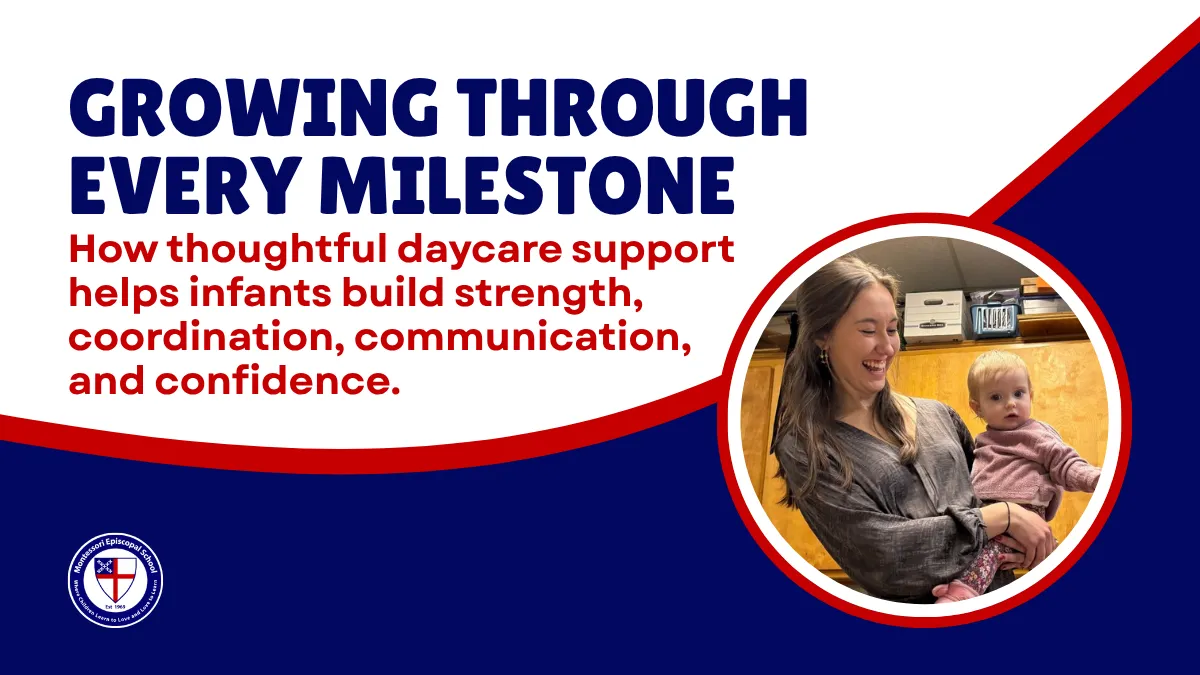
A high-quality daycare setting can play an important role in supporting infant development milestones. In a Montessori environment, milestones are not treated as a race or checklist. Instead, caregivers observe each child closely and provide the right surroundings, materials, and encouragement to support steady growth across physical, cognitive, social, and emotional development.
Encouraging Movement and Coordination
Infants develop through movement. From turning their heads toward a sound to rolling, reaching, sitting, crawling, and eventually pulling up, each movement builds strength and body awareness. Montessori classrooms support this process by giving infants safe floor time and freedom to move naturally.
Caregivers may support physical development through:
- Open floor spaces for stretching and rolling
- Grasping materials that strengthen hand control
- Low mirrors that encourage lifting the head and visual focus
- Safe objects placed just within reach to inspire movement
- Time outside of restrictive seats or containers
These experiences help infants develop coordination, balance, and confidence in their bodies.
Supporting Language and Early Communication
Language development begins long before a child speaks their first words. In Montessori infant daycare, caregivers use warm, respectful language throughout the day. They name objects, describe actions, sing softly, and respond to coos, gestures, and facial expressions.
This responsive communication teaches infants that their sounds and signals have meaning. Over time, these early exchanges support listening, understanding, emotional connection, and the foundation for future speech.
Nurturing Social and Emotional Growth
Infants also reach important emotional milestones as they learn to trust caregivers, recognize familiar faces, respond to comfort, and engage with others. A calm, consistent environment helps babies feel safe enough to explore and connect.
Montessori caregivers support this growth by responding with patience, offering comfort when needed, and respecting each infant’s individual temperament. These early experiences help children build security, self-awareness, and positive relationships, all of which are essential to healthy development.
How Montessori Infant Daycare Supports the Whole Child
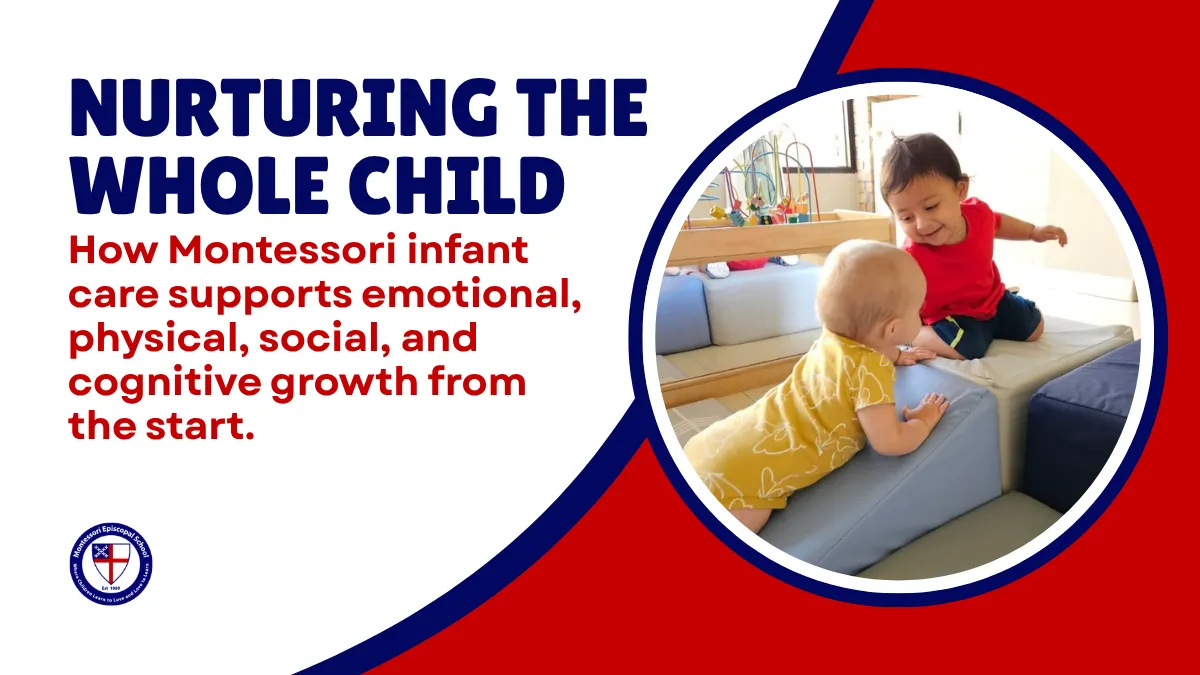
Montessori infant daycare supports more than early academics or basic care. It focuses on the whole child, including physical growth, emotional well-being, language development, independence, and social connection. Each part of the environment is designed to help infants feel respected, secure, and capable as they begin discovering the world around them.
Emotional Security Through Responsive Care
A strong sense of security is one of the most important foundations for infant development. When babies know their caregivers will respond with warmth and consistency, they are more likely to feel calm, connected, and ready to explore. Montessori caregivers pay close attention to each infant’s cues, such as changes in expression, movement, sounds, and energy level.
Responsive care may include:
- Comforting a child with a calm presence
- Following individual feeding and rest needs
- Speaking with respect during care routines
- Offering reassurance during transitions
- Creating predictable rhythms throughout the day
These experiences help infants build trust and emotional confidence.
Cognitive Growth Through Hands-On Learning
Infants learn by using their senses. They look, listen, touch, grasp, mouth, move, and repeat actions as they begin to understand their surroundings. Montessori materials for infants are simple and purposeful, allowing children to focus on one concept at a time, such as texture, sound, movement, or cause and effect.
Instead of overwhelming infants with too many choices, the environment offers carefully selected materials that match their developmental stage. This helps support concentration, curiosity, and early problem-solving.
A Foundation for Independence and Lifelong Learning
Supporting the whole child also means honoring each infant’s growing independence. Small moments, such as reaching for a toy, participating in a routine, or exploring a safe space, help babies develop confidence. Over time, these experiences encourage self-trust and motivation.
By combining nurturing care with purposeful learning, Montessori infant daycare helps children develop in a balanced way. Infants are supported not only as young learners but as capable individuals with their own needs, rhythms, and potential.
Conclusion
Montessori infant daycare gives babies the care, space, and encouragement they need during one of the most important stages of development. Through a calm environment, respectful routines, freedom of movement, and attentive guidance, infants are supported as capable learners from the very beginning. Each small moment, from reaching for a material to responding to a caregiver’s voice, helps build confidence, trust, coordination, and independence.
Ready to learn more about infant care at Montessori Episcopal School? Contact us today at (972) 895-9050 or visit https://montessoriepiscopal.com/contact/.


Leave a Reply
Want to join the discussion?Feel free to contribute!