
Montessori Education Explained: How It Supports Independent And Confident Learners
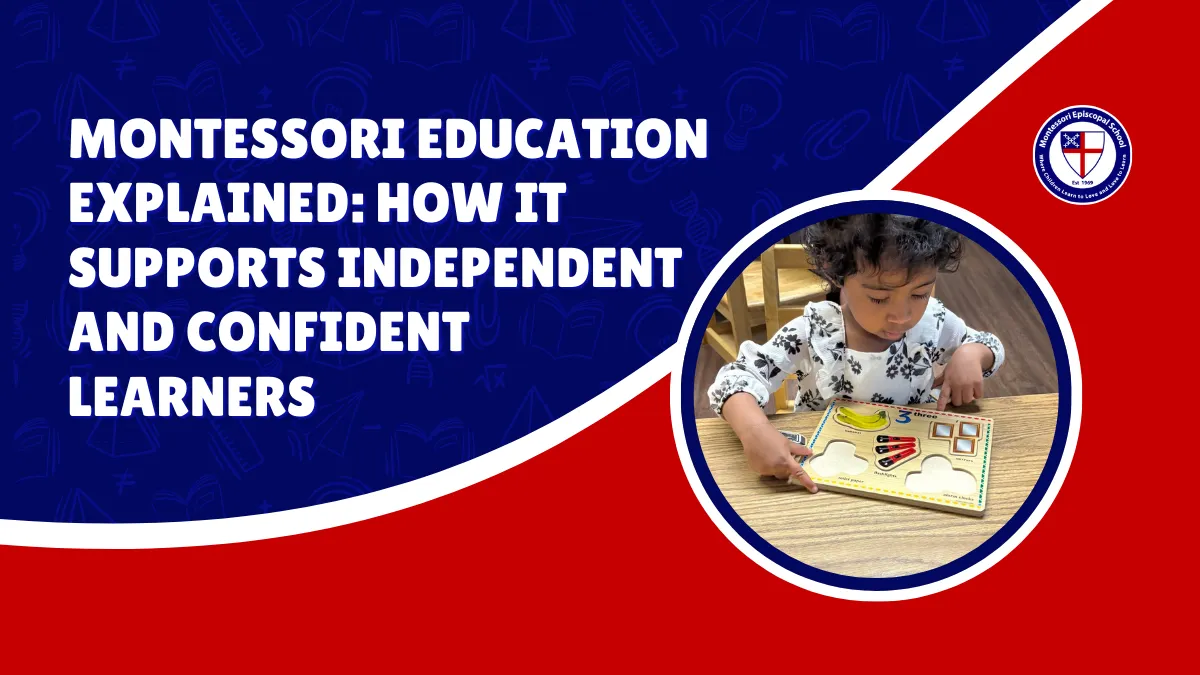
Montessori education benefits include helping children build independence, confidence, and a genuine love of learning through purposeful, hands-on experiences. In a Montessori classroom, students work at their own pace within a carefully prepared environment that encourages choice, responsibility, and focus.
Teachers serve as attentive guides, observing each child’s progress and introducing lessons when students are ready to advance. This approach supports steady academic growth while strengthening practical life skills, problem-solving, and self-regulation. Over time, children learn to trust their abilities, take initiative, and develop the confidence to engage thoughtfully with new challenges.
Inside The Montessori Method: A Clear Look At How Montessori Education Works
Montessori education is built around a simple goal: helping children learn how to learn. Instead of relying on constant instruction, the method creates conditions in which children can practice skills, make thoughtful choices, and build steady confidence through daily work.
The Prepared Environment
A Montessori classroom is intentionally designed to enable children to function with increasing independence. Materials are placed within reach, activities are organized by area, and each item has a clear purpose. The environment supports self-direction because children know where to go, how to begin, and how to put work away with care.
Key elements often include:
- Low, accessible shelves that invite choice
- Hands-on materials that isolate one skill at a time
- Consistent routines that build order and responsibility
The Role Of The Teacher
In Montessori, the teacher is a guide rather than the center of attention. Teachers observe, introduce lessons when a child is ready, and then step back to allow practice. This approach respects individual development and encourages children to take ownership of progress.
A guide typically focuses on:
- Observing interests, strengths, and readiness
- Presenting lessons with clear, minimal steps
- Supporting independence without interrupting concentration
How Children Learn Through Work
Children engage in meaningful work that builds attention, coordination, language skills, and problem-solving skills. Many lessons follow a “concrete to abstract” progression, allowing children to understand concepts through hands-on activities before moving into symbols, writing, and more complex thinking. Mixed-age groupings also support natural mentorship, collaboration, and leadership.
The Daily Work Cycle
A defining feature is extended work time, in which children choose tasks, repeat activities, and deepen their skills without being rushed.
Over time, children learn to:
- Make appropriate choices and follow through
- Persist through challenge and refine effort
- Develop independence that feels earned, not forced
This structure supports focus and self-regulation while giving children the space to complete work with pride.
Growing Capable Kids: The Benefits Of Montessori Learning For Children

Montessori learning is designed to support the whole child, not only academic development. By giving children real responsibility, meaningful choices, and hands-on work, Montessori helps them grow into capable learners who feel confident in their ability to try, practice, and improve.
Independence That Feels Natural
Children build independence through age-appropriate routines and classroom expectations. They learn to choose work, prepare materials, and complete tasks with care. This creates a steady sense of competence because children experience the results of their own effort.
Common independence-building experiences include:
- Managing personal belongings and classroom materials
- Completing multi-step activities from start to finish
- Practicing self-care skills, such as handwashing and tidying
Focus, Self-Regulation, And Strong Work Habits
Montessori classrooms promote concentration. Children receive uninterrupted work periods that allow them to settle into purposeful activity and strengthen their attention over time. Repetition is encouraged to support mastery and help children learn to manage frustration without giving up.
Montessori can strengthen:
- Attention span and sustained focus
- Patience, persistence, and follow-through
- Problem-solving through trial, error, and reflection
Confidence Built Through Mastery
Confidence grows when children can see their progress. Montessori materials are designed to make learning visible and measurable. Many activities include a built-in way for children to check their own work, encouraging self-correction and reducing reliance on constant adult approval.
Over time, children begin to:
- Take initiative and make thoughtful decisions
- Speak up with greater clarity and comfort
- Approach new challenges with less hesitation
Social Growth And Respectful Community
Montessori classrooms emphasize cooperation, kindness, and mutual respect. Mixed-age groupings create natural opportunities for leadership and peer learning. Younger children observe older peers, and older children gain confidence by helping others meaningfully.
Social benefits often include:
- Stronger empathy and consideration for others
- Improved communication and conflict resolution skills
- A sense of belonging through shared routines and community values
When Montessori learning is consistent and well-implemented, children develop skills that extend beyond the classroom. They learn to trust themselves, respect others, and take pride in becoming capable, confident learners.
A Side-By-Side Perspective: Montessori Vs Traditional Education
Both Montessori and traditional education aim to help children learn and grow, but they often do so through different structures and expectations. Understanding these distinctions can help families choose an approach that aligns with their child’s needs, learning style, and developmental stage.
The Learning Model: Child-Led Versus Teacher-Led
In a traditional classroom, instruction is typically teacher-directed, with students moving through lessons together on a set schedule. Montessori classrooms are designed for greater student agency. Children choose from carefully prepared activities and work at their own pace, which supports ownership and intrinsic motivation.
A simplified comparison:
- Traditional: Whole-group lessons, consistent pacing for the class
- Montessori: Individual or small-group lessons, personalized pacing
Classroom Structure And Daily Rhythm
Traditional education often relies on shorter periods with frequent subject transitions. Montessori classrooms commonly include longer work cycles that allow children to concentrate, repeat work, and complete tasks without being rushed. This uninterrupted time can strengthen focus and self-regulation.
Montessori environments are also organized into learning areas, such as Practical Life, Sensorial, Language, and Math. At the same time, traditional classrooms may center on grade-level curriculum pacing and subject blocks.
Mixed-Age Grouping And Peer Learning
Many traditional settings group children by age and grade level. Montessori classrooms often use mixed-age communities that support collaboration and leadership. Younger children benefit from observing more advanced work, while older children reinforce skills and confidence by modeling and assisting.
Mixed-age classrooms can encourage:
- Peer mentoring and cooperative learning
- Leadership development through responsibility
- A stronger sense of classroom community
Assessment And Motivation
Traditional education often includes grades, tests, and external benchmarks as primary measures of progress. Montessori typically emphasizes observation, mastery, and skill development, with teachers tracking growth through ongoing assessment rather than frequent testing. Children are encouraged to self-correct, reflect, and build internal motivation through meaningful work.
In many Montessori programs, children learn to:
- Evaluate progress through practice and feedback
- Persist through challenge without fear of failure
- Develop pride in improvement, not only outcomes
Families often find that Montessori is especially supportive for children who thrive on independence and hands-on learning, while traditional education is a strong fit for children who prefer clear structure, direct instruction, and consistent group pacing. The best choice is the one that supports your child’s confidence, curiosity, and long-term growth.
Independence In Action: Practical Life Skills That Build Confidence
Practical Life is a foundational part of Montessori education because it teaches children to care for themselves, others, and their environment. These skills may look simple at first, but they build concentration, coordination, and confidence in meaningful ways. When children practice real tasks with clear steps, they experience the pride that comes from being capable.
Everyday Skills With Purpose
Practical Life activities are based on real life. Children learn by doing tasks that feel relevant and respectful, not pretend work. Each activity is designed to support independence while strengthening fine motor control and sequencing.
Common Practical Life lessons often include:
- Pouring, spooning, and transferring to develop control and precision
- Food preparation, such as slicing soft foods or setting a snack table
- Handwashing, buttoning, zipping, and other self-care routines
- Cleaning work, such as sweeping, wiping tables, or polishing
These experiences support readiness for school routines and daily life at home, while also encouraging children to take responsibility in age-appropriate ways.
Confidence Built Through Step-By-Step Mastery
Montessori Practical Life materials are typically arranged so the steps are clear, the tools fit a child’s hands, and the process can be repeated until it feels natural. Children are not rushed to finish. Instead, they are encouraged to focus on the process, refine their movements, and build mastery.
This approach helps children develop:
- Patience and persistence
- Improved coordination and body awareness
- Stronger attention and follow-through
When a child can complete a task independently, confidence grows from genuine accomplishment. That confidence often carries into other areas of learning.
Responsibility, Respect, And Community
Practical Life also reinforces the values of respect and contribution. Children learn that their actions matter in a shared space. Putting work away, caring for classroom materials, and helping maintain a calm environment become daily habits.
Practical Life supports the community by encouraging children to:
- Restore order after using materials
- Help peers in appropriate ways
- Take pride in contributing to the classroom environment
Over time, these routines create capable learners who trust themselves. Independence becomes part of who they are, not something they are prompted to display. Practical Life helps children build steady, practical, lasting confidence.
Conclusion
Montessori education is more than a teaching style. It is a thoughtful approach that supports children in building independence, confidence, and lasting learning habits. Through a prepared environment, carefully designed materials, and guidance that respects each child’s pace, Montessori helps learners develop focus, responsibility, and a sense of purpose in their work. Over time, children gain practical life skills, academic readiness, and social-emotional strength in a setting that values respect, curiosity, and steady growth. For many families, these outcomes are the lasting Montessori education benefits that matter most.
Ready to explore Montessori for your child? Contact Montessori Episcopal School at (972) 895-9050 or connect with the team here: https://montessoriepiscopal.com/contact/.
Leave a Reply
Want to join the discussion?Feel free to contribute!